
Wondering if it’s too late to strengthen your pelvic floor?
It’s a question many women ask us at the clinic – often quietly, and often after months or even years of symptoms they have felt unable to talk about:
Is it too late to strengthen my pelvic floor?
The short answer is simple: no, it’s never too late.
At Dr Helen Medical in Ringwood, we regularly meet women who feel embarrassed about changes in their body, or who worry that symptoms such as bladder leaks, pelvic discomfort or reduced confidence with exercise are somehow a personal failing. Many have simply assumed it is something they must put up with as they get older or after having children.
We want to reassure you that this is not the case. Pelvic floor problems are common, they are treatable and there is often a great deal that can be done to improve symptoms and restore confidence.
As part of our holistic approach to medicine, we also see women who have stopped exercising altogether for fear of an “accident”. Yet we firmly believe that movement is medicine – and anything that becomes a barrier to staying active is something we are keen to help address.
Sometimes we even use a light-hearted example in clinic:
When was the last time you saw a trampoline or bouncy castle and instinctively shook your head?
For many women, that moment represents the quiet loss of confidence that pelvic floor symptoms can bring. The encouraging news is that this confidence can often be rebuilt.
The Pelvic Floor: A Muscle Group That Can Change at Any Age
Whether you are in your 30s, recently postnatal, navigating perimenopause, or well beyond menopause, the pelvic floor remains a trainable and adaptable group of muscles.
The pelvic floor sits at the base of the pelvis, supporting the bladder, bowel and reproductive organs. It plays an essential role in everyday function – from maintaining bladder and bowel control to supporting posture, stability and sexual health.
When these muscles are working well, we rarely think about them. However, when they are weakened, strained, or overly tight, symptoms can begin to appear. These may include leaking when coughing, sneezing or exercising, a feeling of heaviness or dragging in the pelvis, pelvic pain, or a general sense of reduced core strength and stability.
These changes can develop gradually over time and are often linked to normal life events such as pregnancy and childbirth, hormonal shifts around menopause, chronic coughing or straining, previous surgery, or simply the natural ageing process.
Importantly, pelvic floor dysfunction is not always about weakness alone. In some cases, the muscles may become overactive or tense, which can cause discomfort and functional problems just as easily.
Is It Ever Too Late to Improve Your Pelvic Floor?
One of the most common misconceptions we encounter is that if symptoms have been present for years, improvement is unlikely.
In reality, the pelvic floor muscles can respond to change at any stage of life. With the right guidance, they can become stronger, more coordinated and more supportive.
This is rarely about a single exercise or quick fix. Instead, pelvic health is best supported through a whole-body approach – one that considers movement, posture, strength, lifestyle factors and medical support where needed.
That is why collaboration between healthcare professionals, physiotherapists and fitness specialists can be so valuable.
Supporting Movement and Confidence
At our private clinic in Ringwood, we are fortunate to work alongside trusted local professionals who share our focus on safe, supportive movement.
Ella from The Revolution Gym in Ringwood regularly sees women who are hesitant to participate in exercise classes because they are worried about leaks or discomfort.
She often reassures them that these concerns are far more common than people realise and that, with the right exercises and gradual progression, most women can return to activity safely and confidently.
As Ella explains:
“Women discussing their pelvic floor is often a hot topic within gym classes! We encourage an ‘embarrassment free’ environment around the subject and invite the conversations regularly. To anyone who feels nervous about joining a gym I would say this to you – you are not alone, many women are in the same boat. With current support and guidance we can make significant improvements.
The stigma around women’s health needs to be less of a taboo subject! The more we speak the more education there is to support such matters.”
What Exercises Can Help Improve Pelvic Floor Health?
A strong pelvic floor supports bladder and bowel control and your sex life too! Weakened pelvic floor is affecting many women (more than you think), from post natal recovery to menopause, with the impact on women’s confidence and overall wellbeing being strongly affected. So, did you know, a strong pelvic floor starts with a strong core? By improving your core strength you are strengthening the protection around your organs, resulting in less pressure on your bladder and bowel.
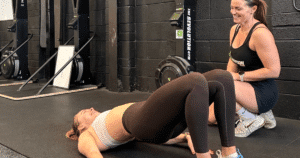
Ella has given us 3 exercises you can do safely within the gym or at home:
Plank holds – are a good start to strengthening your core as they engage all of your abdominal muscles.
Glute bridges – these aren’t just about working the glute muscles, they work so much more! By squeezing the glutes when lifting the hips you are activating the pelvic floor muscles also.
Squats – again these are engaging the entire core, including the glutes and the pelvic floor muscles.
These three movements are just examples of what can be done to support your pelvic floor, there are many more, what we call “functional movements” which support day to day activities and general health.
Ella also explains that “it’s important to remember, the key is consistency rather than intensity. Starting slowly, focusing on good technique and gradually building strength is far more effective than pushing too hard too quickly.”
If you have recently given birth, had surgery, or are experiencing persistent symptoms, it is always advisable to seek medical advice before beginning a new exercise programme.
How Dr Helen Medical in Ringwood Can Help
A GP with a special interest in women’s health can play an important role in identifying and managing pelvic floor problems, particularly when symptoms such as urinary incontinence, pelvic pain or a sensation of heaviness are affecting daily life.
We also support women whose confidence, relationships, or sexual wellbeing have been impacted by pelvic floor symptoms – areas that are often difficult to talk about, but deeply important to overall quality of life.
Our approach begins with listening carefully and taking a thorough medical history. Where appropriate, we can carry out examinations, assess risk factors and offer first-line treatments tailored to your individual needs.
These may include practical lifestyle advice, bladder training strategies and guided pelvic floor exercises. In some cases, prescription medications can help improve symptoms. These may involve treatments to support urinary health, manage infections, address hormonal changes or relieve vaginal dryness and discomfort.
We also regularly support women experiencing symptoms that can overlap with pelvic floor issues, such as abnormal vaginal bleeding, pelvic discomfort or menopausal changes.
When additional support is needed, we can refer patients to specialist physiotherapists or arrange further investigation with gynaecology or urogynaecology services. Our aim is always to provide timely, coordinated care that considers the whole person.
A Whole-Body Approach to Pelvic Health
As part of our holistic approach to wellness, we often collaborate with trusted partners who can offer complementary support.

For example, Wimborne Wellness Centre takes a movement-based, musculoskeletal approach to pelvic health. Their focus is on how the spine, pelvis and surrounding muscles work together – recognising that pelvic floor symptoms are rarely isolated to one area of the body.
Their role may include supporting pelvic and lower back function, improving core stability and addressing movement patterns that may be contributing to symptoms. Treatment can involve gentle chiropractic care, soft tissue work to reduce tension, and personalised rehabilitation exercises tailored to each individual.
For patients experiencing pelvic or lower back pain, this whole-body approach can be particularly valuable in improving comfort, movement and confidence.
Evidence-Based Pilates Combined with Holistic Menopause Coaching
We also asked for advice from Lisa Tubb from Protea Wellness. Lisa is a certified menopause coach, with a qualification in Pilates specifically for women’s health.
Lisa explains:
“In my work, I’ve supported women at many different stages – from those recovering after childbirth, including traumatic births, to those navigating perimenopause and post-menopausal women. Whether experiencing incontinence, prolapse, or pelvic pain, each woman’s journey is unique.
Pelvic floor health is often reduced to ‘just do your Kegels’, but in reality, it’s far more nuanced and deeply connected to how the whole body functions. One of the most important – and often overlooked – relationships is between the pelvic floor and the diaphragm.
These two structures work in harmony as part of your core system. As you inhale, the diaphragm descends and the pelvic floor gently lengthens; as you exhale, the diaphragm lifts and the pelvic floor recoils and subtly engages. When breathing is shallow or held, this natural rhythm is disrupted. Relearning diaphragmatic breathing can be transformative, restoring balance and improving both core and pelvic floor function.
Equally important is understanding that the pelvic floor is not just about strength – it’s about function. A muscle that is constantly gripping or overactive can be just as problematic as one that is weak. Many women I work with are surprised to learn that symptoms such as pelvic pain, urgency or even leakage can be linked to a pelvic floor that struggles to relax.
True pelvic health comes from having a responsive, adaptable pelvic floor that can both contract and fully release when needed. Incorporating breathwork, gentle mobility and mindful movement alongside strengthening exercises creates a much more effective and sustainable approach.”
A Collaborative Approach to Women’s Health
What makes this model of care especially effective is the collaboration between medical and physical support.
By combining medical expertise from women’s health clinicians, movement and rehabilitation guidance from physiotherapists, and structured exercise support from trained professionals, women receive well-rounded care that addresses both the underlying causes and the physical impact of pelvic floor dysfunction.
This integrated approach allows treatment to be personalised, practical and sustainable.
You’re Not Alone – And It’s Not Too Late
Pelvic floor symptoms are incredibly common, but they are not something you have to simply live with.
Whether your symptoms are new or have been present for years, there are almost always steps that can be taken to help you feel stronger, more comfortable and more confident in your body.
Most importantly, it is never too late to start.
How to Get Started
If you are experiencing pelvic floor symptoms, or would simply like to better understand your body, support is available.
You can speak to Dr Helen Medical for a medical assessment and personalised women’s health support, or explore movement and musculoskeletal care through trusted partners such as Wimborne Wellness Centre. Our practitioners are also happy to signpost you to fitness partners that we work with and trust.
Taking the first step may feel small, but it can make a meaningful difference to your health, confidence and quality of life.
Call Dr Helen Medical on 01202 022956 or book online to arrange an appointment.
With Thanks to Our Local Contributors
We would like to extend our sincere thanks to our valued local partners – Wimborne Wellness Centre, The Revolution Gym and Lisa Tubb from Protea Wellness – for sharing their expertise and supporting women’s pelvic health within our community.
Their commitment to safe, supportive and evidence-informed care plays an important role in helping women regain confidence in their bodies at every stage of life.